This is a demo store. No orders will be fulfilled.


 CAN
CAN  US/Global
Free Reproducibles
Engage in the Mathematical Practices
Strategies to Build Numeracy and Literacy With K–5 Learners
Increase student learning with engaging lesson plans and high-level tasks. In this user-friendly guide, mathematics teachers will discover more than 40 strategies for ensuring students learn critical reasoning skills and retain understanding. Each chapter is devoted to a different Standard for Mathematical Practice and offers an in-depth look at why the standard is important for students' understanding of mathematics.
Benefits
- Gain examples of high-level tasks and lesson design templates that promote the Standards for Mathematical Practice.
- Discover targeted strategies you can use to help students meet the standards.
- Explore research that supports the importance of the standards and strategies.
- Consider real-life experiences that illustrate the tools and strategies at work.
- Access reproducible task guides, task sources, and planning tools.
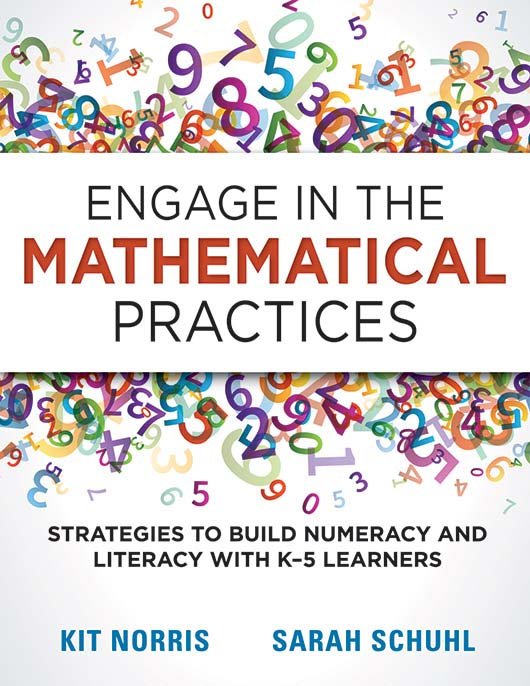
TABLE OF CONTENTS
Chapter 1: Standard for Mathematical Practice 1: Make Sense of Problems and Persevere in Solving Them
Chapter 2: Standard for Mathematical Practice 2: Reason Abstractly and Quantitatively
Chapter 3: Standard for Mathematical Practice 3: Construct Viable Arguments and Critique the Reasoning of Others
Chapter 4: Standard for Mathematical Practice 4: Model With Mathematics
Chapter 5: Standard for Mathematical Practice 5: Use Appropriate Tools Strategically
Chapter 6: Standard for Mathematical Practice 6: Attend to Precision
Chapter 7: Standard for Mathematical Practice 7: Look for and Make Use of Structure
Chapter 8: Standard for Mathematical Practice 8: Look for and Express Regularity in Repeated Reasoning
Epilogue: What Do I Do With These Strategies?
Appendix A: Alternate Table of Contents—Literacy Connections
Appendix B: Alternate Table of Contents—Strategies Building Numeracy and Literacy
Appendix C: Standards for Mathematical Practice—Background
Appendix D: Standards for Mathematical Practice
Appendix E: CCSS for Mathematics Grades K–5
Appendix F: The Task-Analysis Guide
Appendix G: Sources for Higher-Level-Cognitive-Demand Tasks
Appendix H: Mathematics Vocabulary and Notation Precision
REPRODUCIBLES
Introduction
- Figure I.2: Instructional Strategies for Literacy and Mathematics
- Figure I.3: Literacy and Mathematics Strategies Venn Diagram
- Figure I.5: CCSS Mathematical Practices Lesson-Planning Tool
Chapter 1
- Figure 1.1: High-Level Task for Mathematical Practice 1
- Table 1.1: Student Evidence and Teacher Actions for Mathematical Practice 1
- Figure 1.5: What I Know, What I Need to Know Template
- Figure 1.6: Sample Frayer Model
- Figure 1.12: Grade 1 Strategy Graphic Organizer
- Figure 1.15: Sample Role Cards
- Figure 1.17: Grade 4 Lesson-Planning Tool for Mathematical Practice 1
- Figure 1.18: Task 1 for Mathematical Practice 1 Grade 4 Lesson
- Figure 1.19: Task 2 for Mathematical Practice 1 Grade 4 Lesson
- Strategies for SMP 1: Make Sense of Problems and Persevere in Solving Them
Chapter 2
- Figure 2.1: Grade 2 Apple Task
- Table 2.1: Student Evidence and Teacher Actions for Mathematical Practice 2
- Figure 2.2: Venn Diagram Example
- Figure 2.3: Venn Diagram Showing Multiples of 4 and 6
- Figure 2.11: Grade 2 Lesson-Planning Tool for Mathematical Practice 2
- Figure 2.12: Task 1 for Mathematical Practice 2 Grade 2 Lesson
- Figure 2.13: Task 2 for Mathematical Practice 2 Grade 2 Lesson
- Figure 2.14: Task 3 for Mathematical Practice 2 Grade 2 Lesson
- Figure 2.15: Closure Task for Mathematical Practice 2 Grade 2 Lesson
- Strategies for SMP 2: Reason Abstractly and Quantitatively
Chapter 3
- Figure 3.3: Same or Different?
- Table 3.1: Student Evidence and Teacher Actions for Mathematical Practice 3
- Figure 3.7: Reach 100 Sentence Frames
- Figure 3.8: Reach 100 Adjusted Sentence Frames
- Figure 3.9: I Know This, So I Know That Sentence Frames
- Figure 3.10: Find the Error Activity
- Figure 3.11: Grade 2 Make Suggestions Example
- Figure 3.12: Grade 5 Factor Facts
- Table 3.3: Peer Review Protocol
- Table 3.4: Problem-Solving Rubric
- Figure 3.13: Reflection Rubric
- Figure 3.14: Feedback Rubric
- Figure 3.16: Grade 3 Lesson-Planning Tool for Mathematical Practice 3
- Figure 3.17: Task 2 for Mathematical Practice 3 Grade 3 Lesson
- Figure 3.18: Task 3 for Mathematical Practice 3 Grade 3 Lesson
- Strategies for SMP 3: Construct Viable Arguments and Critique the Reasoning of Others
- Sample Feedback Rubric
Chapter 4
- Figure 4.1: High-Level Task for Mathematical Practice 4
- Table 4.1: Student Evidence and Teacher Actions for Mathematical Practice 4
- Figure 4.2: Three Questions Recording Sheet
- Figure 4.5: Rule of Five Graphic Organizer
- Figure 4.9: Grade 1 Lesson-Planning Tool for Mathematical Practice 4
- Figure 4.10: Task 1 for Mathematical Practice 4 Grade 1 Lesson
- Figure 4.11 : Task 3 for Mathematical Practice 4 Grade 1 Lesson
- Strategies for SMP 4: Model With Mathematics
Chapter 5
- Figure 5.1: High-Level Task for Mathematical Practice 5
- Table 5.1: Student Evidence and Teacher Actions for Mathematical Practice 5
- Figure 5.5: Fraction Strips
- Figure 5.10: Line Plot Task
- Figure 5.11: Kindergarten Lesson-Planning Tool for Mathematical Practice 5
- Figure 5.12: Task 1 for Mathematical Practice 5 Kindergarten Lesson—Add the Dice
- Figure 5.13: Task 1 for Mathematical Practice 5 Kindergarten Lesson—Cup Subtraction
- Figure 5.14: Task 1 for Mathematical Practice 5 Kindergarten Lesson—Make 10
- Figure 5.15: Task 1 for Mathematical Practice 5 Kindergarten Lesson—Subtract 2
- Figure 5.16: Task 2 for Mathematical Practice 5 Kindergarten Lesson
- Strategies for SMP 5: Use Appropriate Tools Strategically
Chapter 6
- Figure 6.2: Using a Ruler
- Figure 6.3: What's in the Bank? Activity
- Table 6.1: Student Evidence and Teacher Actions for Mathematical Practice 6
- Figure 6.6: Making Sense Example
- Figure 6.7: Context to the Rescue! Example
- Figure 6.9: Does It Fit? Example
- Figure 6.10: Vocabulary Graphic Organizer
- Figure 6.11: Making Connections Organizer
- Figure 6.15: Target Practice Example
- Figure 6.17: Grade 4 Lesson-Planning Tool for Mathematical Practice 6
- Figure 6.18: Task 1 for Lesson Mathematical Practice 6
- Figure 6.19: Task 2 for Mathematical Practice 6
- Figure 6.20: Task 3 for Mathematical Practice 6
- Strategies for SMP 6: Attend to Precision
Chapter 7
- Figure 7.3: High-Level Task for Mathematical Practice 7
- Table 7.1: Student Evidence and Teacher Actions for Mathematical Practice 7
- Figure 7.4: KWL Chart
- Figure 7.7: Exploration for Metric Conversions
- Figure 7.10: Geometry Structure Example
- Figure 7.13: Tangrams
- Figure 7.15: Grade 3 Lesson-Planning Tool for Mathematical Practice 7
- Figure 7.16: Task 1 for Mathematical Practice 7 Grade 3 Lesson
- Figure 7.17: Task 2 for Mathematical Practice 7 Grade 3 Lesson
- Strategies for SMP 7: Look for and Make Use of Structure
Chapter 8
- Figure 8.2: Fractions—Fact or Fiction?
- Table 8.2: Student Evidence and Teacher Actions for Mathematical Practice 8
- Figure 8.11: Grid Pattern Example
- Figure 8.12: Growing Shape Patterns
- Figure 8.15: What Do You Think? Example
- Figure 8.18: Number Track Task
- Figure 8.23: Grade 5 Lesson-Planning Tool for Mathematical Practice 8
- Figure 8.24: Task 1 for Mathematical Practice 8 Grade 5 Lesson
- Figure 8.25: Task 2 for Mathematical Practice 8 Grade 5 Lesson
- Strategies for SMP 8: Look for and Express Regularity in Repeated Reasoning
Epilogue
- Figure EP.1: Vision for Quality Mathematics
- Figure EP.2: Aligning Mathematical Practices to Units
- Figure EP.3: Proficiency Map
- Figure EP.4: Strategies for the Standards for Mathematical Practice
- Figure EP.5: Proficiency With the Standards for Mathematical Practice
SUGGESTED RESOURCES
- Common Core Conversation
- EngageNY Mathematics
- Howard County Public School System Secondary Mathematics Common Core
- Illustrative Mathematics
- Inside Mathematics
- Mathematics Assessment Project
- National Council of Supervisors of Mathematics
- National Council of Teachers of Mathematics, "Core Math Tools”
- National Council of Teachers of Mathematics Illuminations
- Partnership for Assessment of Readiness for College and Careers Task Prototypes and New Sample Items for Mathematics
- Smarter Balanced Assessment Consortium Sample Items and Performance Tasks


